Start with the room and shower position
A shower screen has a practical job: keeping most of the water in the washing area while allowing you to get in and out comfortably. Begin with the tray or bath size, the shower head position and the space around the entrance. The screen should be chosen as part of that layout, not as a final decoration.
Look at nearby fittings. A basin, toilet, towel rail or room door can limit how a shower door opens. Include handles and towel hooks in the measurements, because these parts can hit other fittings that is not obvious in a product photograph.
If the existing shower sends water across the floor, identify where it escapes before ordering a replacement screen. The issue could involve the direction of spray, the opening, a damaged seal or poor drainage. A bigger piece of glass does not solve every water problem.
Fixed screens and open entrances
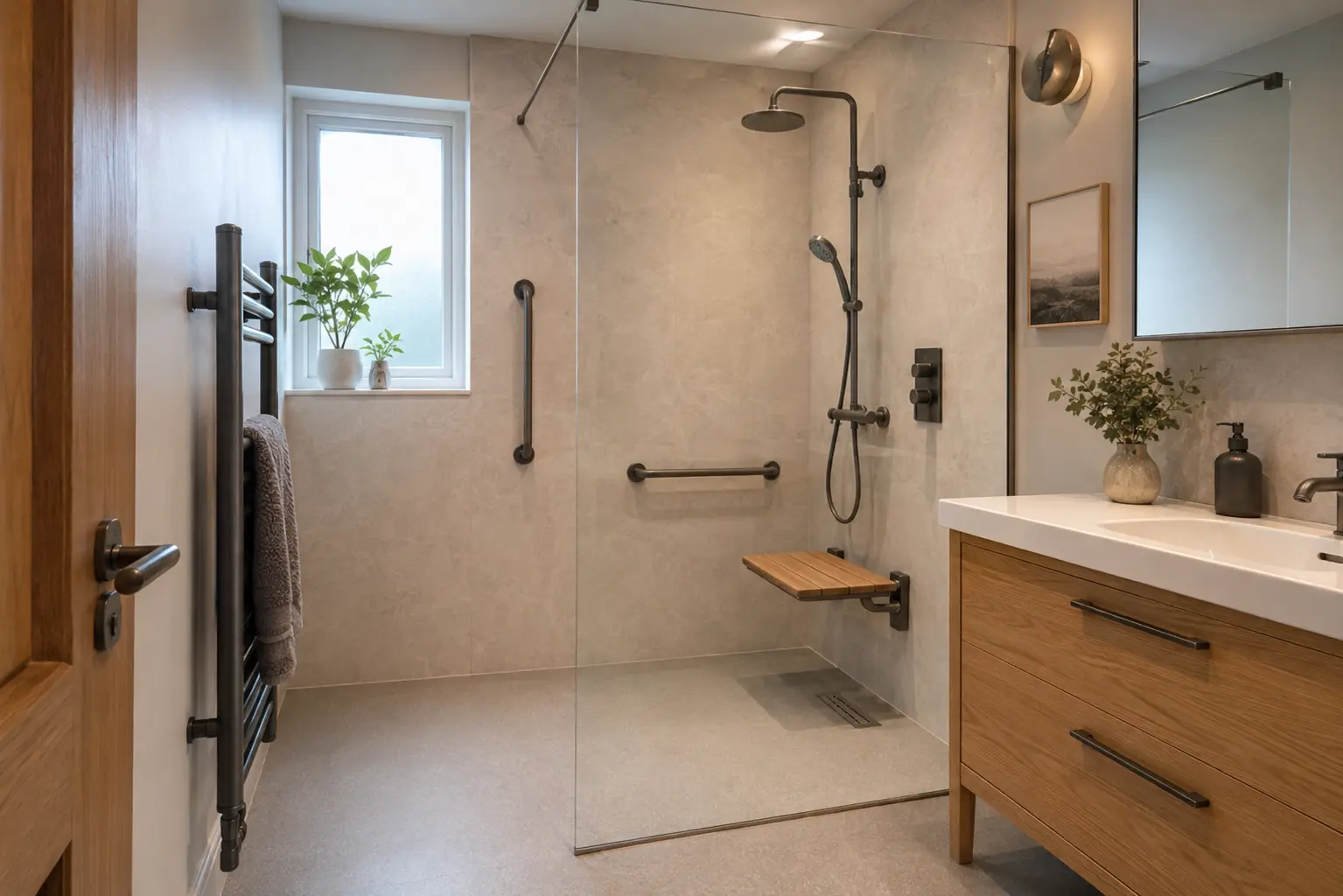
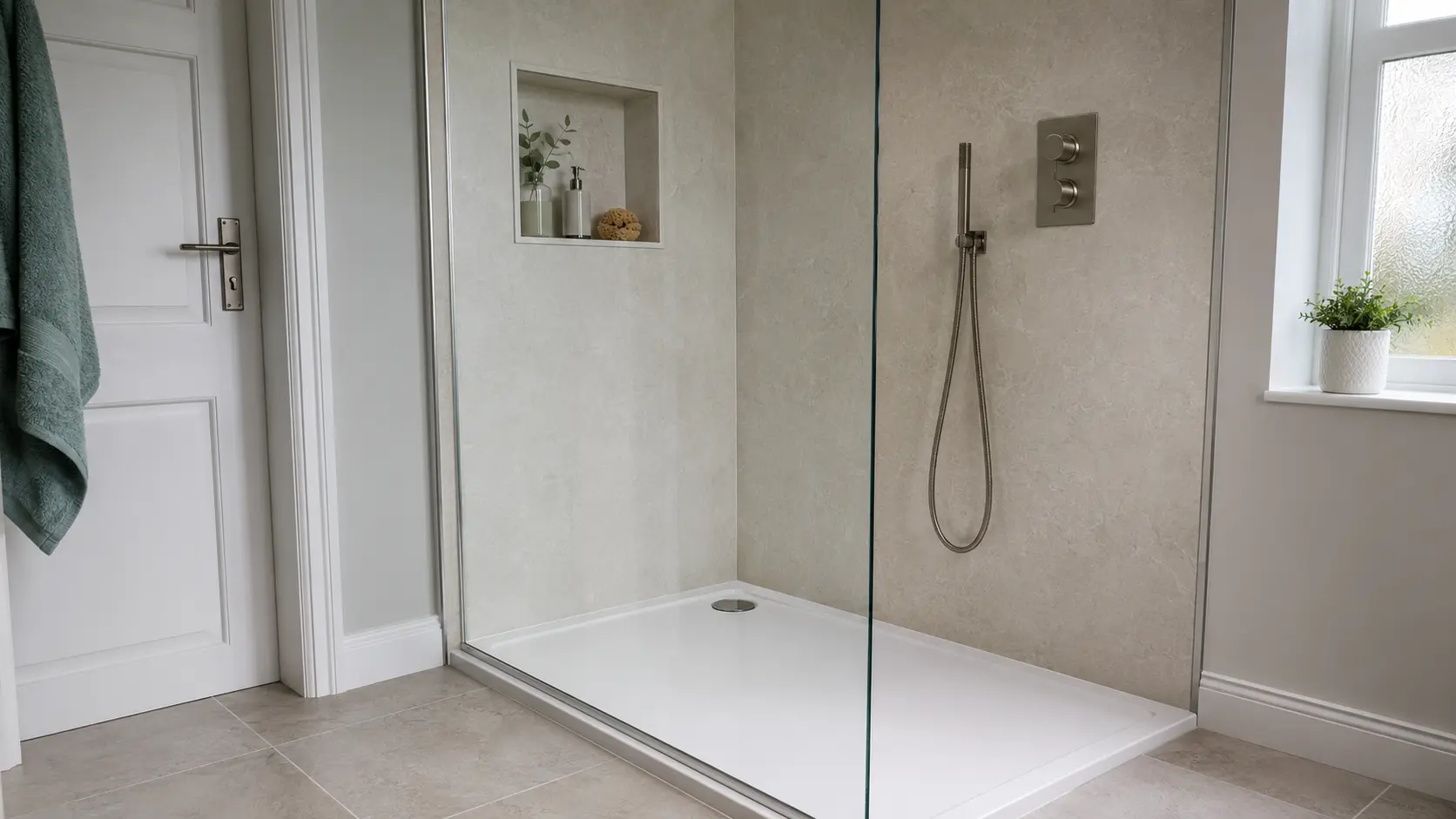
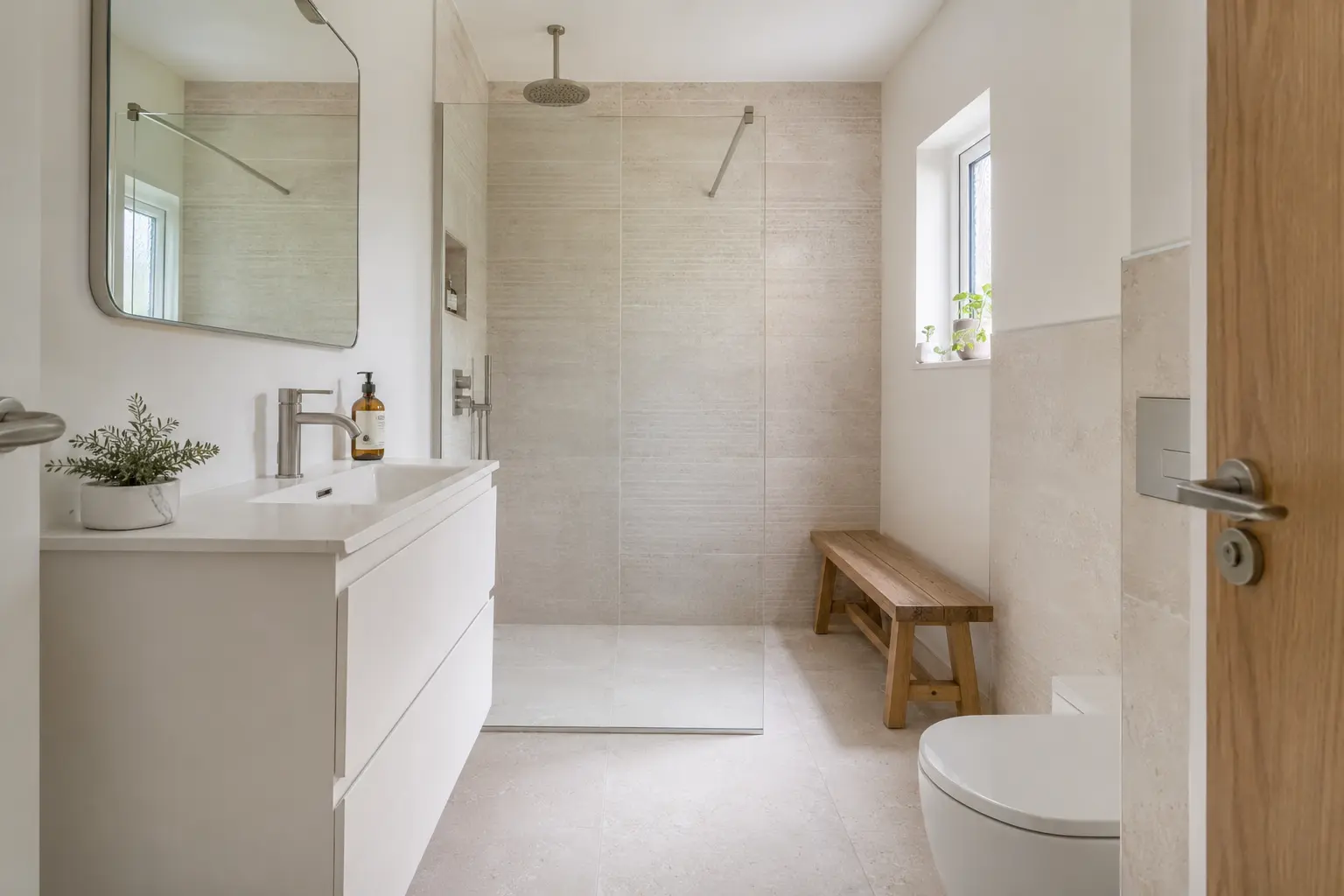
A fixed screen can give a walk-in shower a simple appearance and avoid a moving door. It needs enough screened space for normal showering, with the entrance placed away from the main spray where possible. The right dimensions depend on the room and shower arrangement.
An open entrance can be convenient, but it is not automatically suitable for a very short tray or a powerful spray close to the opening. Ask the fitter to explain why the proposed screen length works with the shower head and the position where you will stand.
Check the support bar too. Its position can affect access, ceiling details or the available space above the shower. The glass and its fixings must be suitable for the installation. The support bar is part of the screen structure, not a place to hang heavy items or a substitute for a grab rail.
Hinged doors and return panels
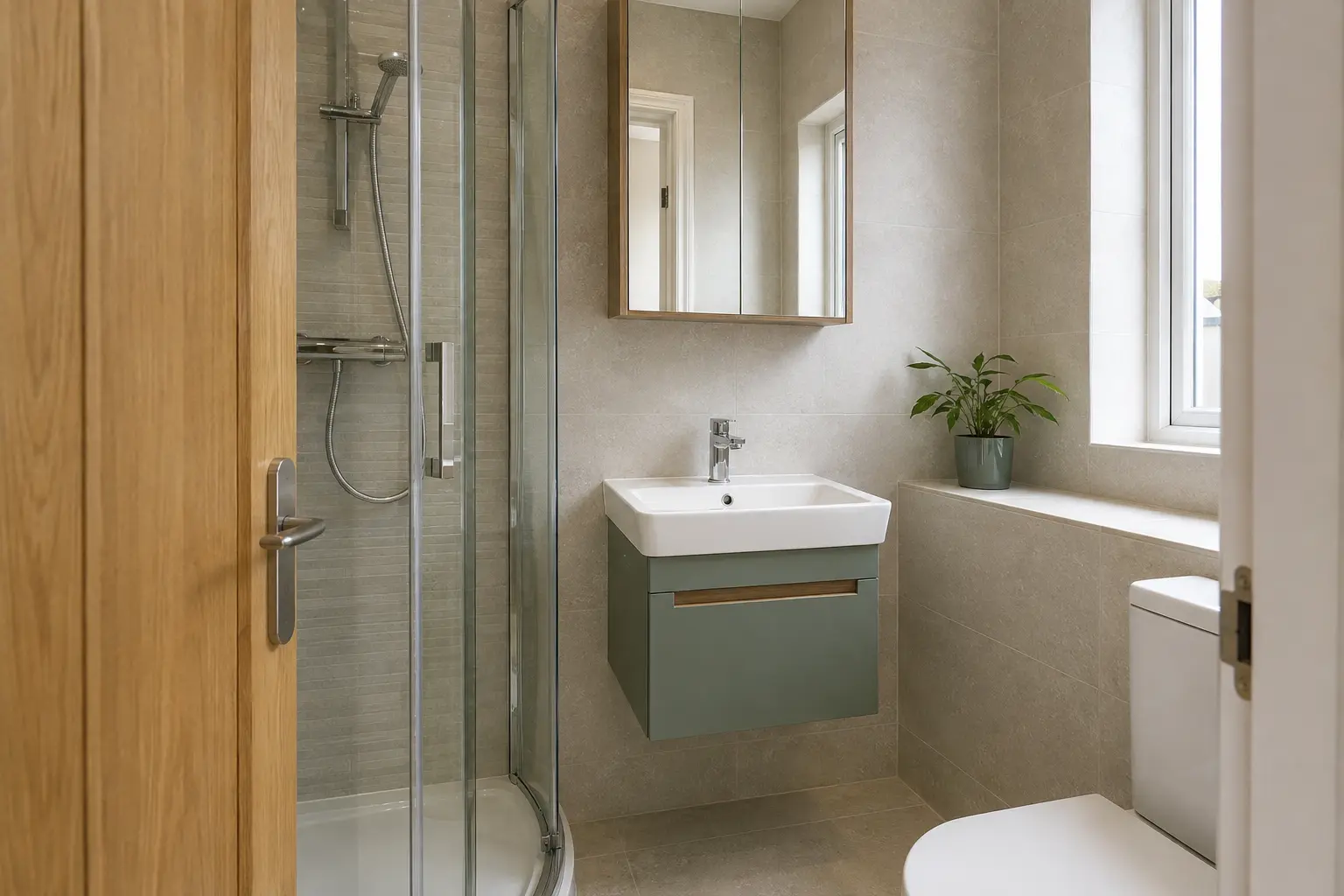
A hinged shower door can contain water while giving a clear opening when swung out. It needs enough floor space for the whole movement. Check that it will not strike the basin or trap you in a narrow space beside the toilet as you step out.
A hinged return panel is a smaller moving piece added to some walk-in screens. It can help manage spray at the entrance without enclosing the whole shower. Its useful position depends on the layout, and it still needs room to move without contacting nearby fittings.
Ask how the door or panel closes and whether the seals are replaceable. Handles should be comfortable to use with wet hands. If opening strength or reach is a concern, try a comparable product before choosing it and discuss the person’s needs with the fitter.
For help with your plans, see Walk-in Shower Installation in Bangor. At your home appointment, we check the room and the work needed before preparing your quote.
Sliding and folding shower doors
Sliding doors can work well where an outward swing would clash with another fitting. Part of the glass overlaps, so the usable entrance is smaller than the overall enclosure width. Compare the access measurement rather than assuming the whole front will open.
Tracks, rollers and overlapping glass need cleaning and occasional maintenance. Look for clear access to these areas and keep the product information for future replacement parts. A screen that looks straightforward from the front may have awkward corners when you try to wipe the inside.
Folding doors offer another way to save outward opening space. Check where the folded panels sit and how much washing space remains. Inward movement should not bring a panel against the shower controls, shelf or person using the shower. The product dimensions and opening diagram are worth checking carefully.
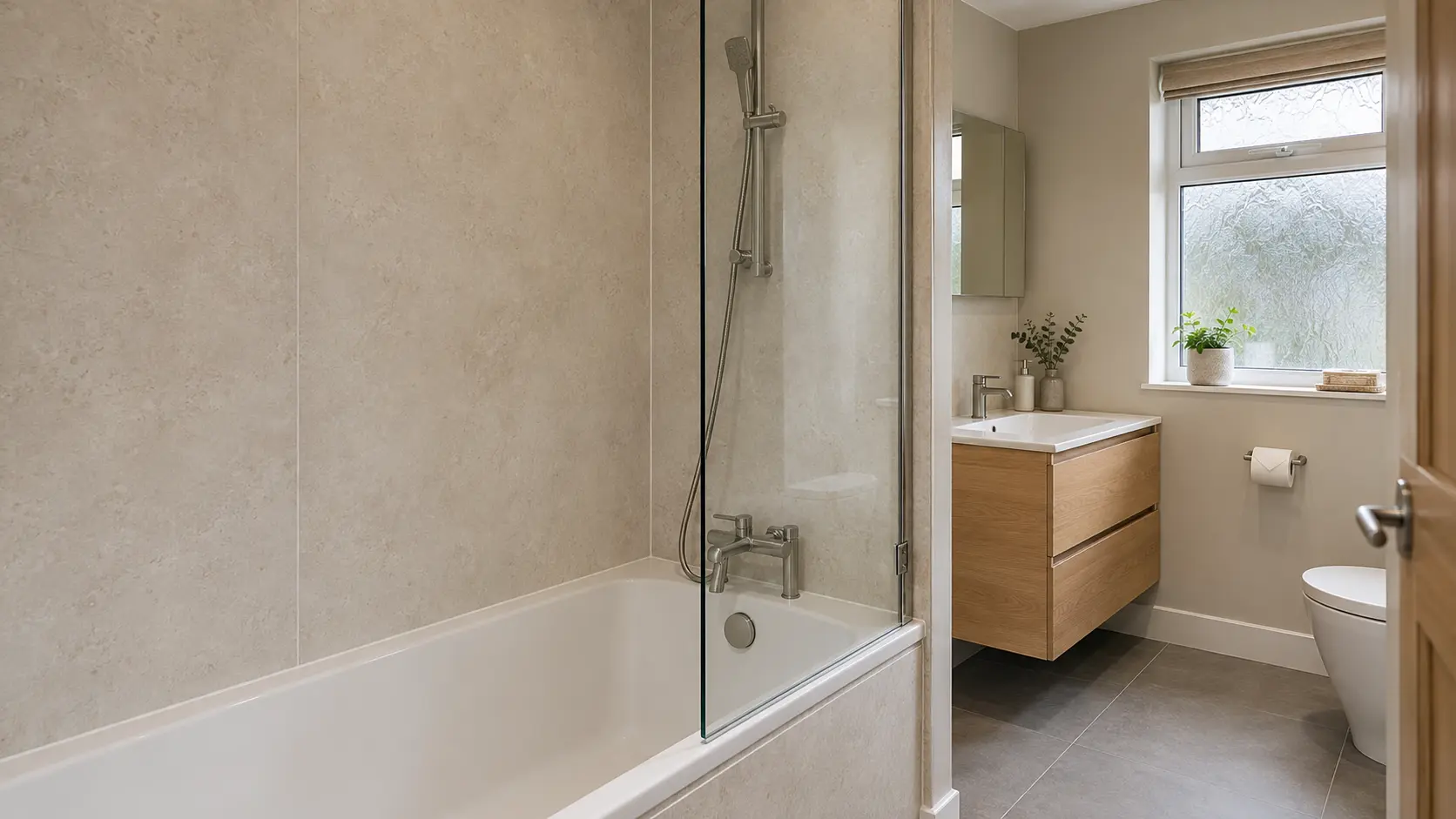
Think about glass, frames and cleaning
Clear glass keeps the view through the shower open. Framed or patterned glass can change the look, but neither choice removes the need for cleaning. Consider what the frame adds at the bottom and corners, where water and soap can collect.
Follow the maker’s care instructions for any coating on the glass. A coating may help with routine cleaning, but it does not mean the screen will never show water marks. Avoid choosing a product on a maintenance-free promise without reading what the manufacturer actually recommends.
Make sure both sides of the screen can be reached safely. A narrow gap between the glass and a vanity can become a place you cannot clean properly. The layout should leave practical access without needing to lean over sharp corners or stand on unstable furniture.
Read our related guide: Choosing a Shower for a Tight Space
Include fitting and finishing in the decision
The walls and tray must suit the screen’s fitting requirements. Walls that are not straight may need preparation or a product with an appropriate adjustment range. The installer should measure the finished opening, not rely only on the original room dimensions.
Ask what happens to existing screw holes, old silicone and wall finishes when a screen is replaced. A new frame may not cover the same marks as the old one. If the join between the wall and tray is damaged, that needs attention rather than simply being hidden behind another seal.
At handover, check the opening, closure and access to controls. Ask when the shower can be used after sealing and how to clean the product. A suitable screen should make the bathroom easier to use each day, with fewer splashes and no awkward movement around the entrance.